The Philippine textile is a form of expression and part of our culture and heritage as a Filipino. The traditional weaving in the Philippines by the indigenous people is sadly in decline in interest from the younger generation.
Back in the Philippines, when I was a kid my aunt and my cousin never fail to bring us various treats and handmade gifts, “pasalubong” whenever they go to various provinces for work or holiday. Different woven bags, blankets and coin purses that are intricately designed and crafted by the indigenous people are some of my fondest memories.
Let me share more details about weaving in the Philippines and its significance to the Filipino people. Moreover, share our local wonderful heritage with the world.
Origin of weaving in the Philippines
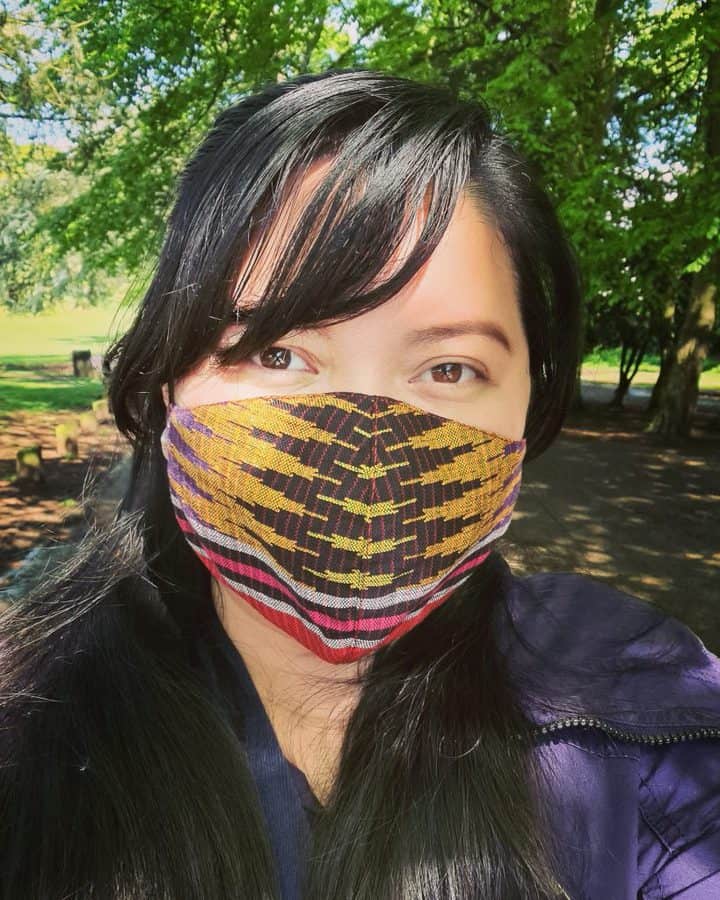
The first historical traces of weaving in the Philippines was found in a cave in Cagayan Province and Palawan Island dated 1255 – 605 BCE. Archaeologists found a stone tool (Bark- Cloth Beater) used for the preparation of bark cloth that was used to pound the bark to loosen the pulp from the fibre to use for weaving textiles.
Panay Island in the Philippines is considered the heart of Philippine textiles. According to the legends that were passed on over the generations, a few Datus (chief) from Borneo including Datu Lubay went to the island and introduce the art of weaving.
The Banton cloth is an approximately 400-year-old ikat (tie-resist dyeing) textile, the oldest in Southeast Asia. It is believed to be a burial cloth and was found inside a wooden coffin together with white and blue ceramics. The Banton cloth was found in Banton Island in Romblon and it is now displayed in the National Museum in the Philippines.
This tradition of using a traditional colourful woven burial cloth to wrap their dead loved ones in is still practiced in Bontok, Mountain Province.
Read more: Things To Know and Love about Filipino Culture and Values
Importance of weaving in the Philippines
Weaving in the Philippines is one of the distinctive ways of expression of arts, culture and tradition of the indigenous people. Every region of the Philippines has their own handloom tradition that has become their trademark. Just like the Province of Aklan that is known for the Piña (Pineapple) cloth that is now hailed as the “Mother of all Philippine Textile” and commonly used in making the Philippine national costumes: Barong Tagalog and Baro’t Saya.
Over the years, it also became a way for the indigenous people,most especially the women, to earn a living and help with the livelihoods of their family. The older generation of the indigenous people are the ones who are holding the fort to sustain the living heritage of weaving.
Due to the modernisation, new technology, and career opportunities in the city and abroad, the younger generations of the indigenous communities tend to flee to greener pastures.
As an effect, the cultural displacement happened and the heritage of hand weaving is slowly diminishing. In addition, The demand of the traditional hand woven Philippine textile is in decline due to the cheaper alternative and fast fashion of the modern time.
Read more: Visiting Lamlifew Village Museum in Sarangani Province
Types of weaving in the Philippines
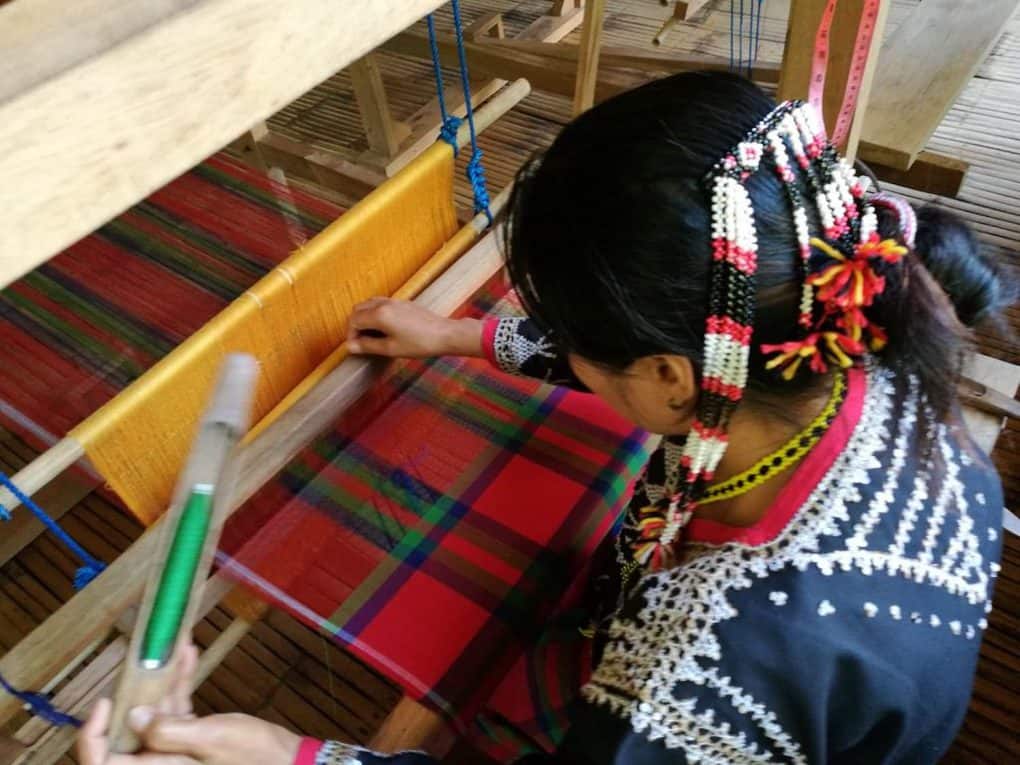
Handloom weaving is the traditional way of creating beautiful and colourful Philippine textiles. The traditional weaving loom is made from bamboo and strings. It is actually fascinating to see them in action and make beautiful fabrics out of it.
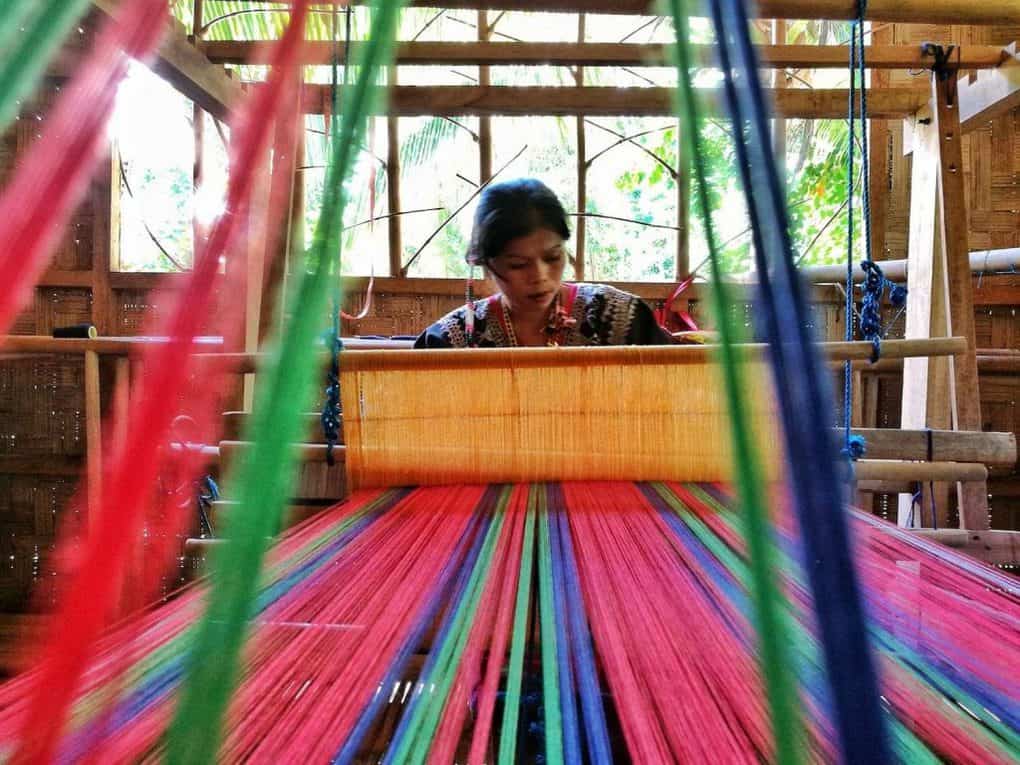
Almost every region of the Philippines is known for a certain kind of traditional textiles or types of weaving pattern.
| Types of Weave | Origin | Community |
| Abel Weave | Ilocos Sur | Ilocano |
| Pinilian | Ilocos | Ilocano |
| Bontoc weave | Mountain Province | Bontoc |
| Kalinga weave | Kalinga Province | Mabilog Lubuagan weavers |
| Piña weave | Aklan | Aklanon |
| Hablon weave | Panay island | Kiniray-a and Hiligaynon |
| Saputagan Tapestry weave | Basilan | Yakan |
| Mabal Tabih | South Cotabato | Blaan |
| Bagobo Inabal | Davao del Sur | Bagobo Manobo |
| Ramit | Mindoro | Mangyan |
| Dagmay | Eastern Mindanao | Mandaya |
| Maranao Textile | Marawi, Lanao del Sur | Maranao |
| T’nalak | South Cotabato | Tboli |
| Pis Syabit textile | Sulu | Tausug |
How to promote weaving in the Philippines
Promoting the weaving tradition and Philippine textile is a joint effort from everyone. The challenge of sustainability and of the passing on the weaving tradition to the younger generation is what we are facing now. As the demand for handwoven textile from the indigenous people increase, but the supply chain of making the textile is also a challenge due to lack of funding and machineries.
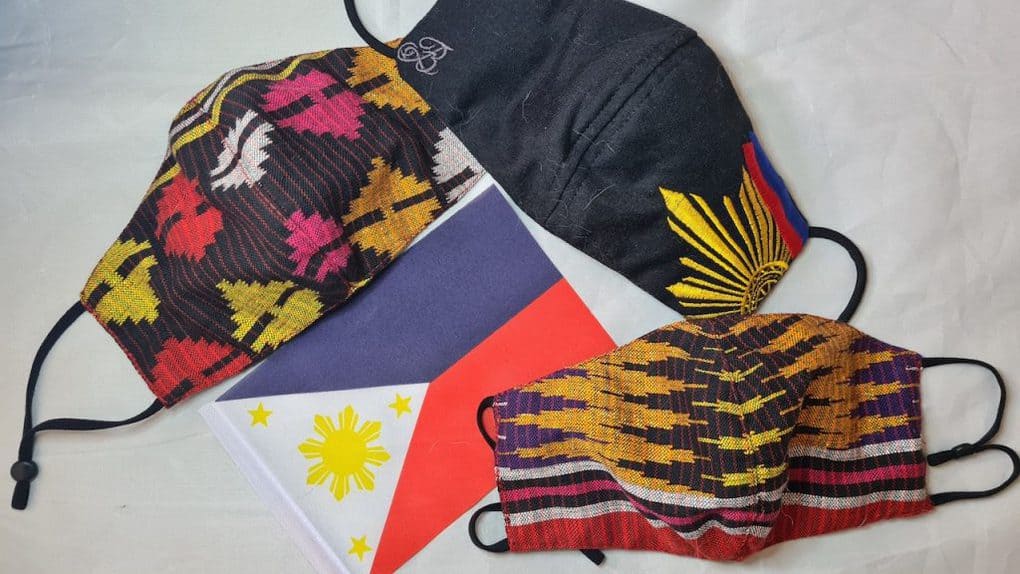
Makabayan UK lead by Sam Soto Jennings and Mireille Vizcarra started the advocacy in helping the indigenous communities in the Philippines to have their products available in the UK. During this pandemic, the indigenous communities livelihood is greatly affected. As a way of helping, Makabayan UK is using their platform to sell various handwoven textile items like face masks and scarves.
They directly sourcing the items from the indigenous communities and parts of the profit also goes back to the indigenous communities to help them sustain their craft and livelihood.
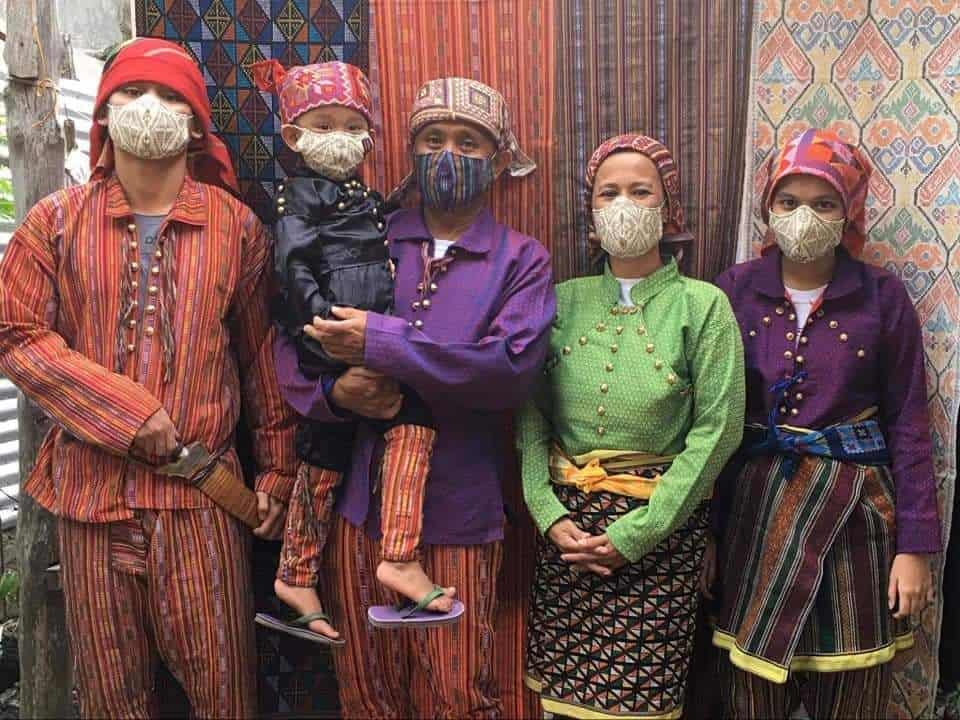
You can visit the Makabayan UK (@makabayan.uk) shop on Instagram to show your support, raising awareness and cultural appreciation to the weaving industry of the indigenous people in the Philippines.
ABOUT THE AUTHOR

Ryazan Tristram
Travel Writer & PhotographerRyazan has a Bachelor’s Degree in Tourism and Hotel Management. She also has more than 10 years of work experience gained from working in the hotel and travel sectors in Asia and Europe. Her work has been featured and published in BBC, Huffington Post, Reader’s Digest, Discovery Channel, World Travel Guide, MSN, CNBC, GMA, Daily Mail UK, Lonely Planet, and many more. She is currently living in the UK as a dual citizen (British-Filipina). Join her in travelling around the UK, Europe, and beyond with a mission to promote sustainable tourism and share travel guides, travel tips, foodies, history, and culture.